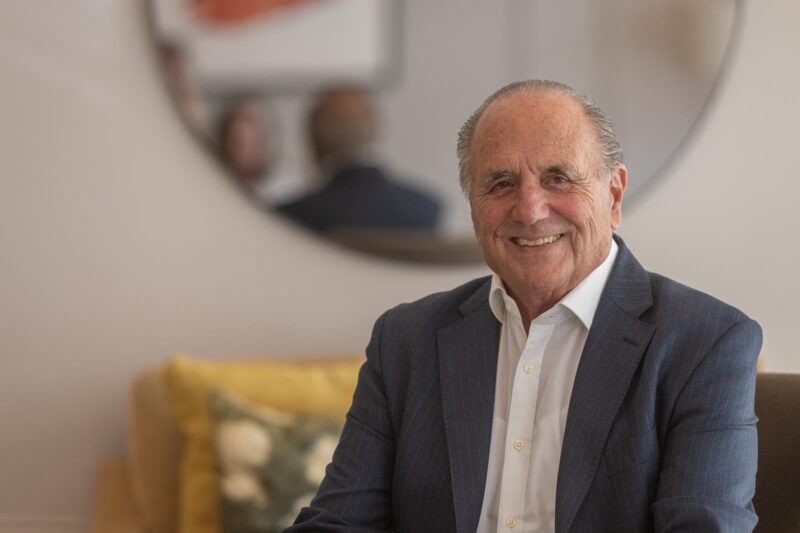
Following his WTTC Icon Award recognition, our Founder, Alfred Pisani reflects on the vision, entrepreneurial leadership, values and principles that have shaped…
From Malta to the European Stage: KinetiHear’s Entrepreneurial Journey
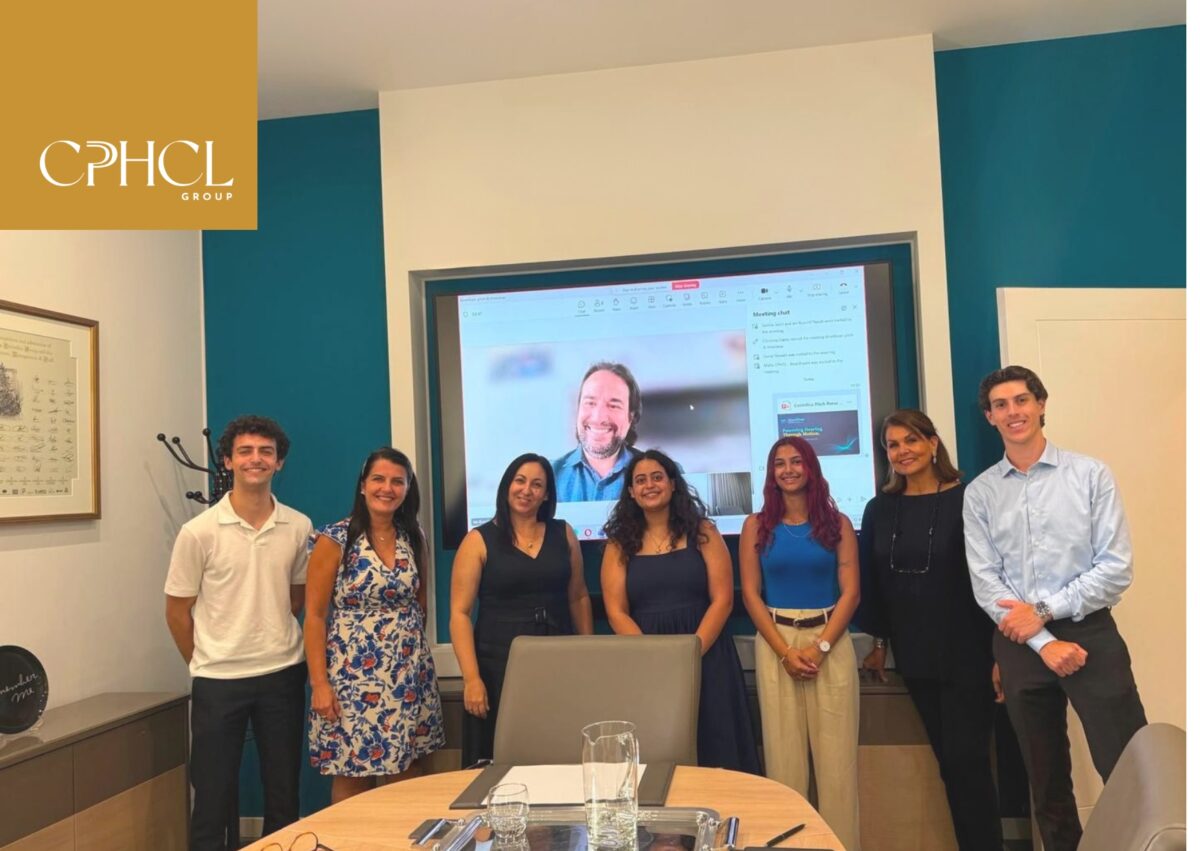
Fresh from their return from Gen-E 2026 in Riga, where they represented Malta as winners of the JA Foundation Malta Start-Up Programme and were awarded the prestigious One Minute Pitch Award, the KinetiHear team sat down with members of CPHCL Group management to share their journey from idea to innovation. Born from a personal experience and driven by a desire to improve lives, KinetiHear has developed an innovative battery solution for cochlear implants that harnesses the wearer’s movement to generate power. The start-up has already gained international recognition, putting Maltese entrepreneurship and ingenuity firmly on the map. Read on to discover the inspiration behind the innovation, the challenges overcome, and the team’s vision for the future of hearing technology.
Can you share the story behind that Cologne train station conversation that sparked the entire project? It all started on a train station platform in Cologne. I was travelling between venues during a JA Alumni Conference held annually, accompanied by a few friends I had met through JA Alumni Malta. We were mid-conversation when suddenly I head two beeps: the batteries in my cochlear implants ran out. With no spare batteries on me, I had to halt the conversation and warn my friends that I was, quite suddenly, completely deaf. Consequently, navigating a foreign country without hearing was anxiety inducing, but my friends immediately stepped in. However, what started as perhaps an awkward moment quickly pivoted into a conversation about awareness and accessibility. As a group of entrepreneurs, our next thought was almost inevitable, in that “How can we try solve this problem?”. That question became the spark for our project.
You recognised that the average lifespan of zinc batteries was creating both financial and emotional challenges for implant users. How did this realisation lead to the development of your solution? While cochlear implants have given me the ability to hear and bridge the gap between the deaf and hearing worlds, some set of challenges still persist. One of the biggest is batteries. Currently, there is no reliable way to track battery life, meaning users are often left guessing when they would need replacements. After all we’re all only human, and I’ve had moments when I’ve forgotten to pack spare batteries, with some very real consequences. Moreover, many European countries do not cover battery costs. Much like prescription medicine, batteries are a necessity, with expenses that keep accumulating year after year, leaving users to shoulder costs themselves. These everyday frustrations made us realise that the solution wouldn’t simply be a “better” battery but a more reliable, accessible and sustainable way of powering hearing devices.
How does MotionCharge harvest and convert energy, and by how many additional hours can itextend the operating life of a standard cochlear implant battery? We aim for MotionCharge to capture energy from the surroundings such as head movement and convert it to electricity through energy harvesting and energy regulation. We currently cannot give an accurate estimate of how many additional hours MotionCharge will extend the battery life of a hearing implant however we are aiming to increase it by an amount that significantly decreases technology dependent stress from the user.
How important is KinetiHear’s breakthrough as the world’s first provider of an energy harvesting solution for hearing implants, both for the healthcare sector and for Malta? Once we prove MotionCharge can work, it will be another piece of evidence of an emerging energy harvesting industry where “wasted” energy from our physiology can be benefited from. It will be a step in the right direction for the Maltese industry to be a part of the global effort to create a truly circular economy and will be a step forward in our country producing more healthcare based innovations.
You were the winners of the JA Foundation Start-Up Programme 2026.What motivated you to take part, and what did you gain from the experience? We entered the programme as alumni who wanted to do something meaningful together, and the more we looked into the problem we were tackling, the more we realised how serious it actually was for real people. The experience challenged us in developing every part of the business, from the financials to the pitch, as we genuinely did not know where to start. Winning confirmed that others saw the same value in what we were building, and it gave us the structure and credibility to take KinetiHear seriously as a real venture.
What was the biggest challenge you faced throughout your journey so far and how did you overcome it? The biggest challenge we faced so far was probably the competition deadlines. This is because, after winning the Maltese competition, we took the judges’ feedback and immediately started working on gathering insights from mentors who wanted to help us move the company forward, whilst also gathering our own more in-depth research before submitting the newly improved report and pitch deck. To make this happen, we divided work depending on our sectors, got together to seamlessly merge our work, and successfully submitted both documents on time.
Looking back on the entire experience, from identifying the problem to achieving international success, what has been the most rewarding part of the journey? The most rewarding part of the entire journey was being in Riga, Latvia, for GEN E – Europe’s Largest Entrepreneurship Festival organised by JA Europe. We were taking in the experience, soaking up all the networking, rehearsals, and pitches. Best of all, we were surrounded by family, mentors, competitors (who later even became friends), and supporters throughout the entire GEN E experience. This was especially evident on Demo Day, where all the JA companies and startups shared their company ideas at a stand. The amount of interest from people, companies, potential investors, and even the media inviting us for several interviews was insane; we all barely had a breather as we were non-stop networking and sharing our ideas. Moreover, we found out that just that morning we had made it on Latvian news after the CEO of JA Latvia, Jānis Krievāns, had mentioned us in one of his interviews with the press! It was so overwhelming but exceptionally rewarding.
KinetiHear brings together team members from a range of academic disciplines.How has this diversity of expertise contributed to the development of the business? Having a team that spans Mechanical Engineering, Marketing, European Studies, Computing Science, and Sport Management means we approach every challenge from multiple angles rather than just one. Our engineering student drives the technical development of MotionCharge, while our finance, communications, and marketing members ensure the business side is just as solid as the product itself. This blend of perspectives has been one of our greatest strengths, keeping us grounded in both innovation and real-world practicality.
Having achieved so much already, what’s next on the horizon for KinetiHear, and what are your ultimate goals for the business? The next steps for KinetiHear are idea validation, creating a viable product, patenting, and prototyping; following further research into kinetic energy. The ultimate goal is, of course, to create the finished product and be able to start changing the lives of the approximately half a million people in Europe who rely on hearing implants and their current limited battery life, which can make their hearing devices’ batteries die out at any moment in the day with limited warning. We aim to change this through MotionCharge by reducing the customer’s medical device anxiety and reducing the dependence on carrying spare batteries and charging equipment everywhere they go.
Winning an award at Gen-E 2026 in Riga for your one-minute pitch is a remarkable achievement. What did the experience teach you about communicating innovation and entrepreneurship? It taught us that you need to make the problem real to the public and possible stakeholders. Not everyone is deaf, and it is very difficult to truly understand how a deaf person is required to interact in the world and the struggles they face. So when we present, we immerse our audience in an experience where they feel the anxiety and confusion of not being able to hear. For our one minute pitch, halfway through, we stopped talking and mimed. It was purposefully sudden and timed to confuse the audience when they suddenly could not hear us speak. Once the panic had set in their face, we knew they would be convinced of the issue that we are trying to solve; and when there is an issue, there is an entrepreneurial possibility to solve it.
What message would you like to share with other young people who have an idea but are hesitant to take the first step? There were definitely moments where things moved slowly or felt uncertain, especially balancing it all as students, but that never made us want to stop. If anything, those moments reminded us why the problem we are solving matters. As Earl Nightingale once said, “Never give up on a dream just because of the time it will take to accomplish it. The time will pass anyway.” Our advice is simple: start anyway, because the difficult moments are part of it, and they do not last forever.
By Samira Jamil, CPHCL Group Communications & Relationship Manager
Send us your enquiry and we we will respond as soon as possible.
"*" indicates required fields
Manage Consent
To provide the best experiences, we use technologies like cookies to store and/or access device information. Consenting to these technologies will allow us to process data such as browsing behavior or unique IDs on this site. Not consenting or withdrawing consent, may adversely affect certain features and functions.
Functional
Always active
The technical storage or access is strictly necessary for the legitimate purpose of enabling the use of a specific service explicitly requested by the subscriber or user, or for the sole purpose of carrying out the transmission of a communication over an electronic communications network.
Preferences
The technical storage or access is necessary for the legitimate purpose of storing preferences that are not requested by the subscriber or user.
Statistics
The technical storage or access that is used exclusively for statistical purposes.The technical storage or access that is used exclusively for anonymous statistical purposes. Without a subpoena, voluntary compliance on the part of your Internet Service Provider, or additional records from a third party, information stored or retrieved for this purpose alone cannot usually be used to identify you.
Marketing
The technical storage or access is required to create user profiles to send advertising, or to track the user on a website or across several websites for similar marketing purposes.